Build a reliable stock shot
Chipping Lessons and Short-Game Coaching: Where to Start
Build one dependable shot around the green before adding loft, spin and a bag full of complicated options.
The short answer
A useful chipping lesson starts with clean contact, a simple setup and a predictable landing spot. Learn one dependable low or medium chip first, then add other clubs and trajectories only when the basic motion is stable. The aim is to remove the destructive miss and give every shot a clear plan.
Begin with the miss that costs shots
Around the green, one thin shot through the back can turn a simple hole into a big number. Tell the coach whether the common problem is hitting behind the ball, catching it thin, choosing the wrong club or never knowing where to land it.
The lesson should recreate that ordinary situation rather than begin with an advanced shot you rarely need. Several attempts show whether the main issue is contact, setup or decision-making.
Create a simple setup for dependable contact
A small adjustment to stance, ball position and where the body is balanced can make the bottom of the swing more predictable. The movement is shorter than a full swing, but it still needs a clear starting point and a finish that does not collapse at the ball.
There is no value in adding several wrist or body instructions when one comfortable setup produces better contact. The coach can help you recognise what the successful attempt feels like so you can return to it alone.
- Choose a stable, comfortable stance
- Set the ball and club consistently
- Make a small committed movement through the grass
- Hold the finish long enough to notice balance
Choose a landing spot before choosing the swing
A chip is easier to plan when you decide where the ball should land and how much green it has to roll across. A spot just over the fringe may suit a low-running shot; a pin behind a bunker may require more loft and a different margin for error.
Planning in that order turns the shot from “get it near the hole somehow” into a target you can see. It also helps the coach explain why a certain club is useful without making the choice feel arbitrary.
Landing spot first. Club and size of swing second.
Own one stock shot before collecting five
Golfers often search for a different technique for every lie. A beginner or inconsistent chipper usually benefits more from one reliable motion used with a sensible club. Once contact and rollout are predictable, changing clubs can create different trajectories without rebuilding the whole action.
That stock shot will not solve every situation, but it gives you a default and removes unnecessary variation from ordinary chips.
Practise the landing, not just the final result
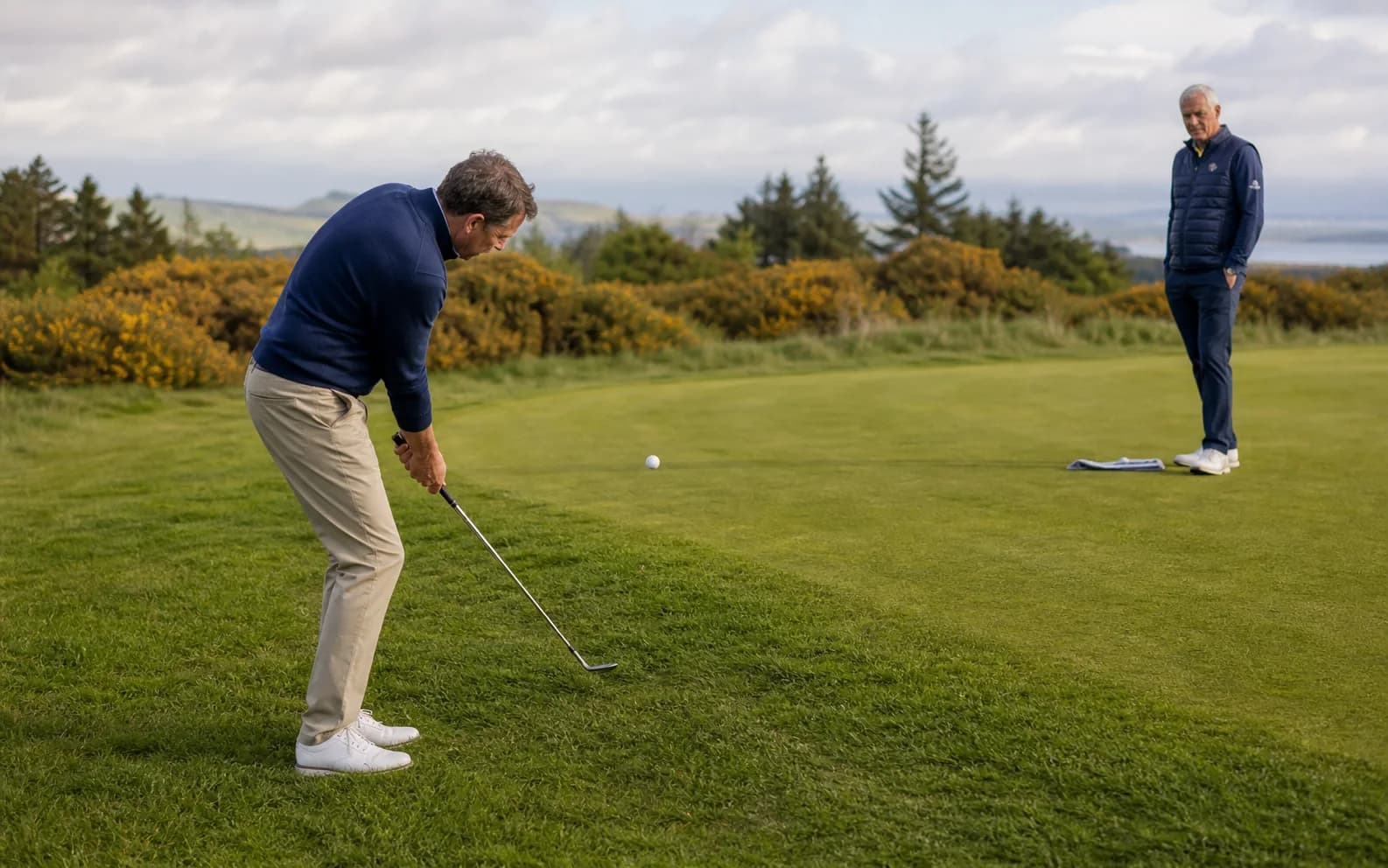
Place a towel or make a small target area on the green and try to land several balls there. Notice both contact and rollout. Then move the target or change club while keeping the basic routine the same.
Finish by playing each ball from a different lie to a different hole. Repetition develops the motion; changing the problem develops the decision. Both matter when you take the shot onto the course.
- Five balls to one landing zone
- Repeat with a second club and compare rollout
- Move to a slightly different lie
- Finish with one ball and a full pre-shot decision
Choose a tune-up or full short-game hour
If the problem is one recognisable chip, Ronnie’s £18 focused 30-minute tune-up may be enough to diagnose it and give you a drill. If chipping, pitching, bunkers and putting all feel uncertain, the £30 full hour creates room to prioritise them properly.
Describe the miss and choose the £18 tune-up for one targeted problem or the £30 hour for broader short-game work.
See what the sessions cover and the practical questions people ask.
Explore short-game coachingMake it personal
The article cannot see your shot. Ronnie can.
Send the problem in ordinary words. A full one-to-one hour is £30, and you will leave with one clear thing to work on next.
Published by
Ronnie Tudhope Golf Coaching
Practical, plain-English coaching guides from Ronnie’s independent service at Ravenspark in Irvine.