Start without the overwhelm
The Best Way to Learn to Play Golf as an Adult
A practical route from complete beginner to purposeful practice and playing a full round.
The short answer
The best way to learn golf as an adult is to get comfortable with the basics, receive feedback on your own swing, practise one priority at a time and then take those skills onto the course. You do not need to master every rule or buy a full set of clubs before you begin.
Start with feedback that belongs to you
Golf advice is everywhere. The difficult part is knowing which piece applies to the swing you are making. A video can explain a grip or a turn, but it cannot see whether your setup, balance or clubface is causing the ball to behave as it does.
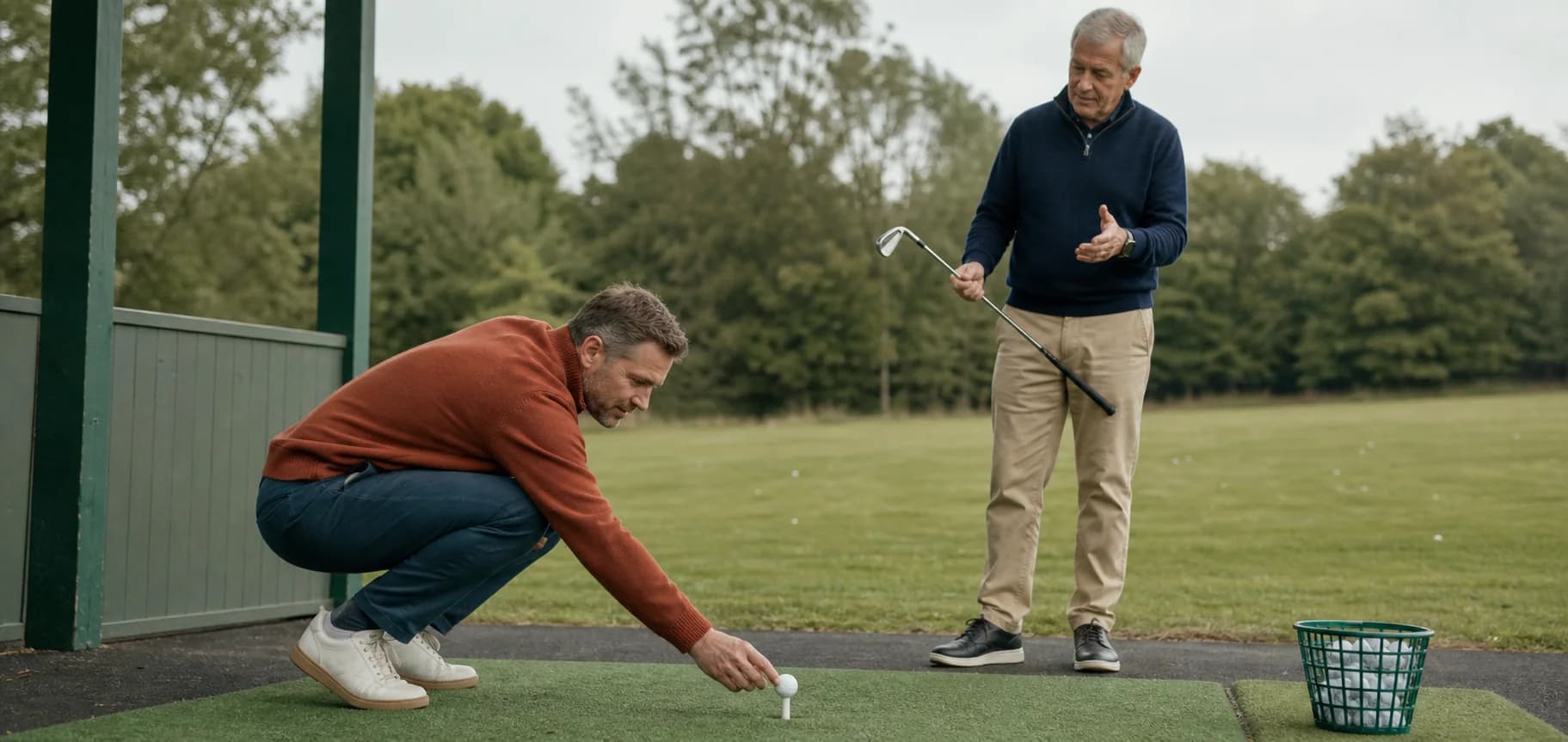
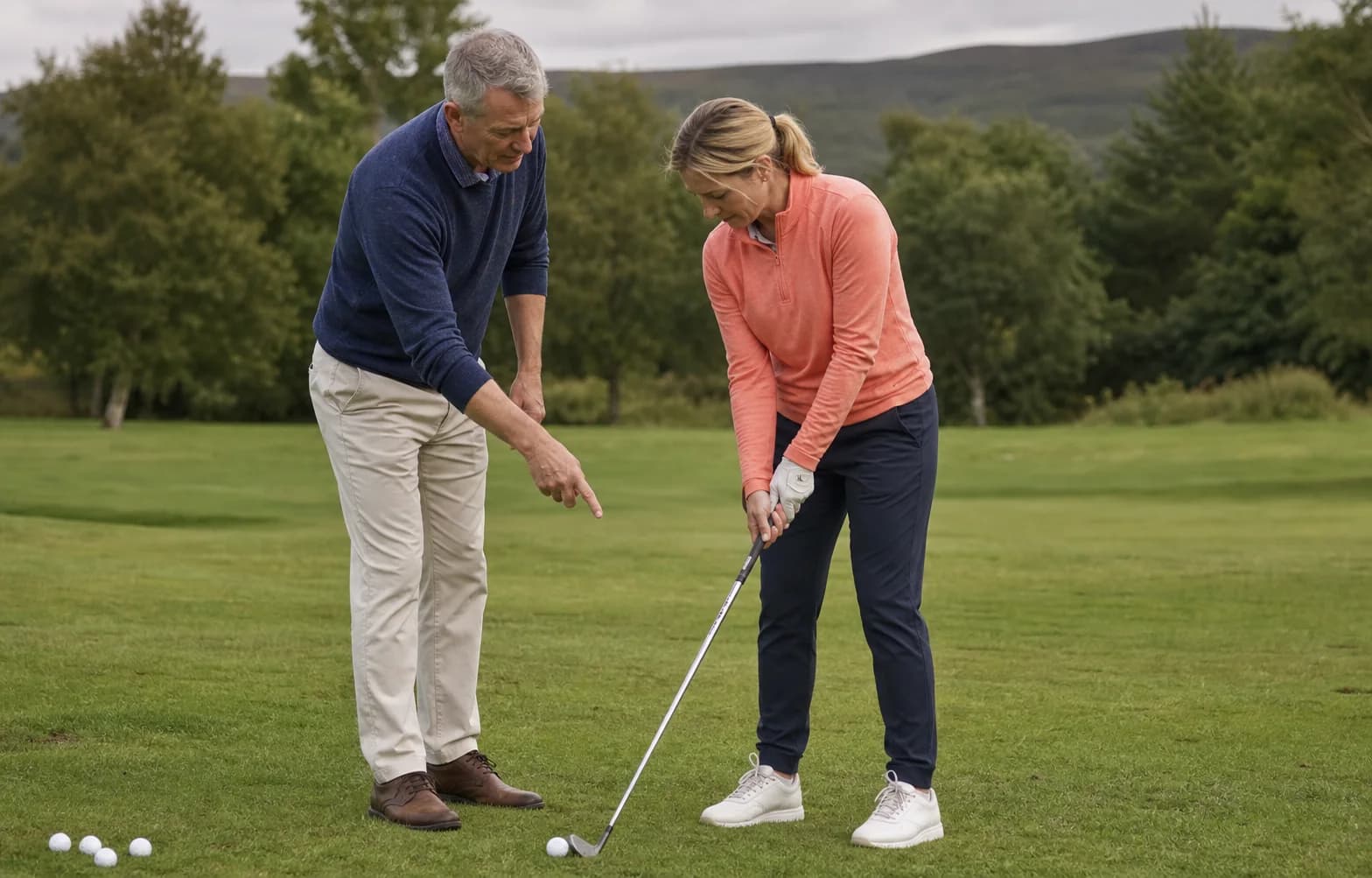
An effective first lesson replaces guesswork with observation. The coach watches a few shots, establishes what you want from golf and chooses the highest-value change. That might be how you hold the club, where the ball sits or how you finish the swing. One clear adjustment is easier to learn than six technical thoughts at once.
A good first lesson should leave you clearer, not more complicated.
If you want to know exactly what happens before booking, the beginner lesson page sets it out step by step.
See how Ronnie structures a beginner lessonLearn the useful basics before chasing a perfect swing
At the beginning, progress comes from a small group of foundations: a comfortable grip, a balanced setup, contact with the ball and a finish you can repeat. You also need a simple way to aim and enough understanding to practise safely around other golfers.
You do not need to memorise swing positions or speak in technical language. A plain-English cue that you understand is more useful than a textbook description you cannot recreate. The aim is a motion you can recognise and repeat, not a swing built to look impressive in a still photograph.
- Hold and aim the club in a way that feels manageable
- Build a balanced starting position
- Make a small swing that finds the ball consistently
- Know one thing to check when a shot goes wrong
Give every practice session one job
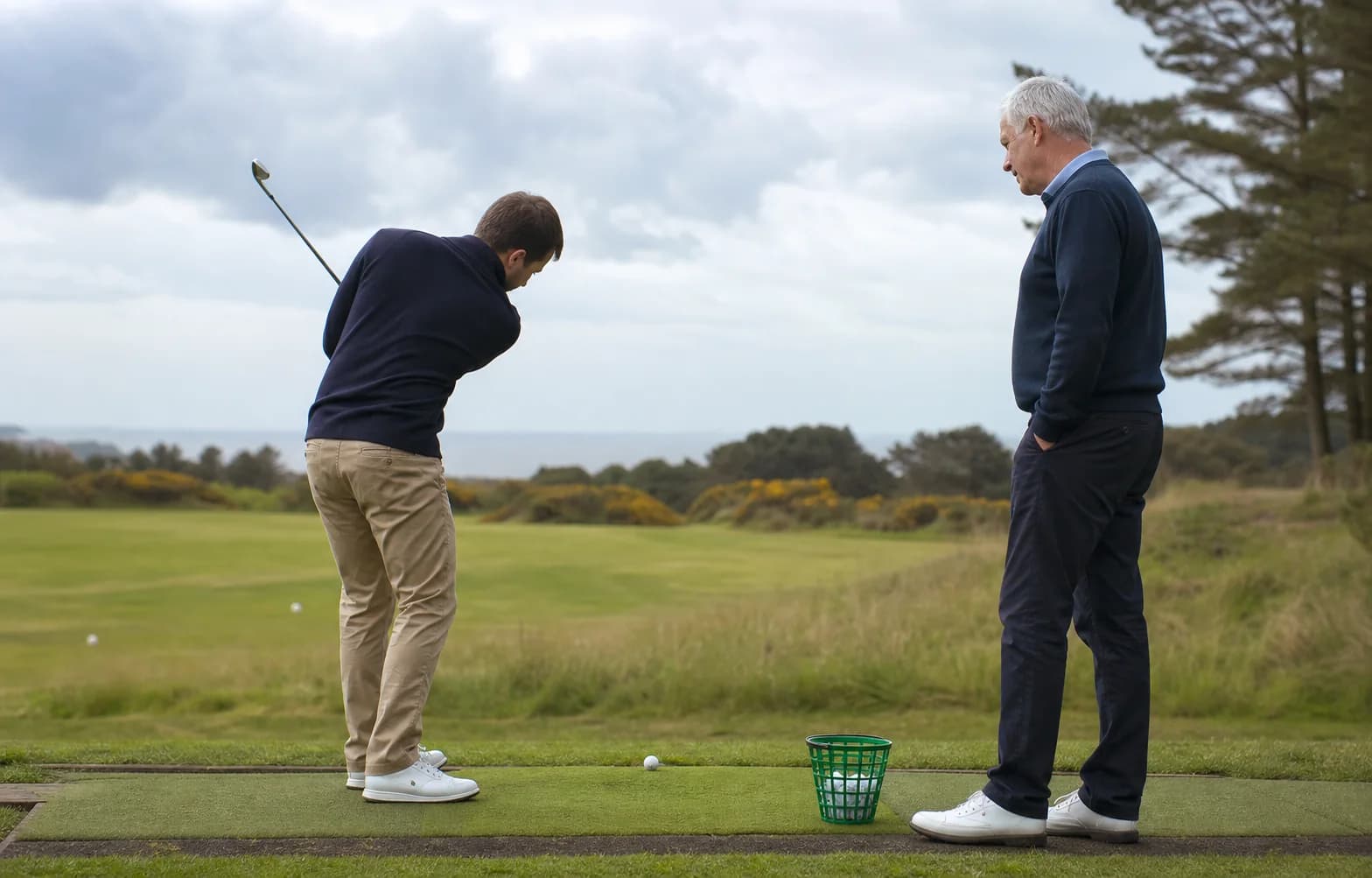
Hitting a large bucket of balls is not automatically good practice. If every shot has a different thought, the session becomes exercise rather than learning. Choose one priority, use a clear target and pause often enough to notice what changed.
Short sessions can work well when they are specific. Ten careful half-swings with the same setup may teach you more than fifty hurried full swings. Finish by hitting a few shots to different targets so the skill starts to feel like golf rather than a drill.
- Pick one club and one target
- Rehearse the movement before each small group of balls
- Judge the pattern, not one perfect or terrible shot
- Stop when tiredness makes the movement careless
Add putting and chipping early
New golfers often spend all their time trying to hit the ball farther. That is understandable, but golf becomes much more enjoyable when you can also move the ball around the green. Putting and chipping use shorter movements, provide quick feedback and help you learn pace and contact.
A simple putting routine and one dependable chip give you ways to finish a hole even while the longer swing is developing. They also make a first visit to a course less intimidating because every shot is not dependent on a full swing.
A focused session can isolate putting, chipping, pitching or bunker play instead of trying to fix everything together.
Explore putting and short-game coachingMove onto the course before you feel perfect
The range is useful because it gives you repetition, but it does not teach uneven lies, target choice, recovery shots or the rhythm of playing a hole. Waiting until your swing feels finished can keep you away from the part of golf you wanted to enjoy.
Your first course experience can be modest: a quiet time, a few holes and permission to pick the ball up when a hole becomes frustrating. The goal is to learn how the pieces fit together. Scores can wait while you get comfortable with where to stand, when to play and how to choose a sensible target.
When the challenge is decisions rather than one swing, playing alongside a coach reveals far more than another bucket of balls.
Understand on-course coachingA simple first-month learning plan
There is no compulsory schedule, but a little structure prevents the early enthusiasm from becoming random. Begin with a lesson that establishes your foundations. Practise the one priority you leave with, add a short-game session and then return for feedback before an unhelpful habit settles in.
The right pace is the one you can afford and enjoy. Ronnie does not require a package: a full one-to-one hour is £30, and each session should produce a useful next step whether you book again soon or practise independently for a while.
- Week one: first lesson and a focused practice session
- Week two: repeat the same priority and add putting
- Week three: review contact and learn one simple chip
- Week four: try a few holes or plan an on-course session
See the £30 full hour, £18 focused tune-up and £75 on-course option before deciding what fits.
Compare the published lesson pricesMake it personal
The article cannot see your shot. Ronnie can.
Send the problem in ordinary words. A full one-to-one hour is £30, and you will leave with one clear thing to work on next.
Published by
Ronnie Tudhope Golf Coaching
Practical, plain-English coaching guides from Ronnie’s independent service at Ravenspark in Irvine.