There is no expiry date on starting
Learning to Play Golf at 60: A Realistic Beginner’s Guide
Start at any age: build the fundamentals, practise with purpose and work towards playing the course.
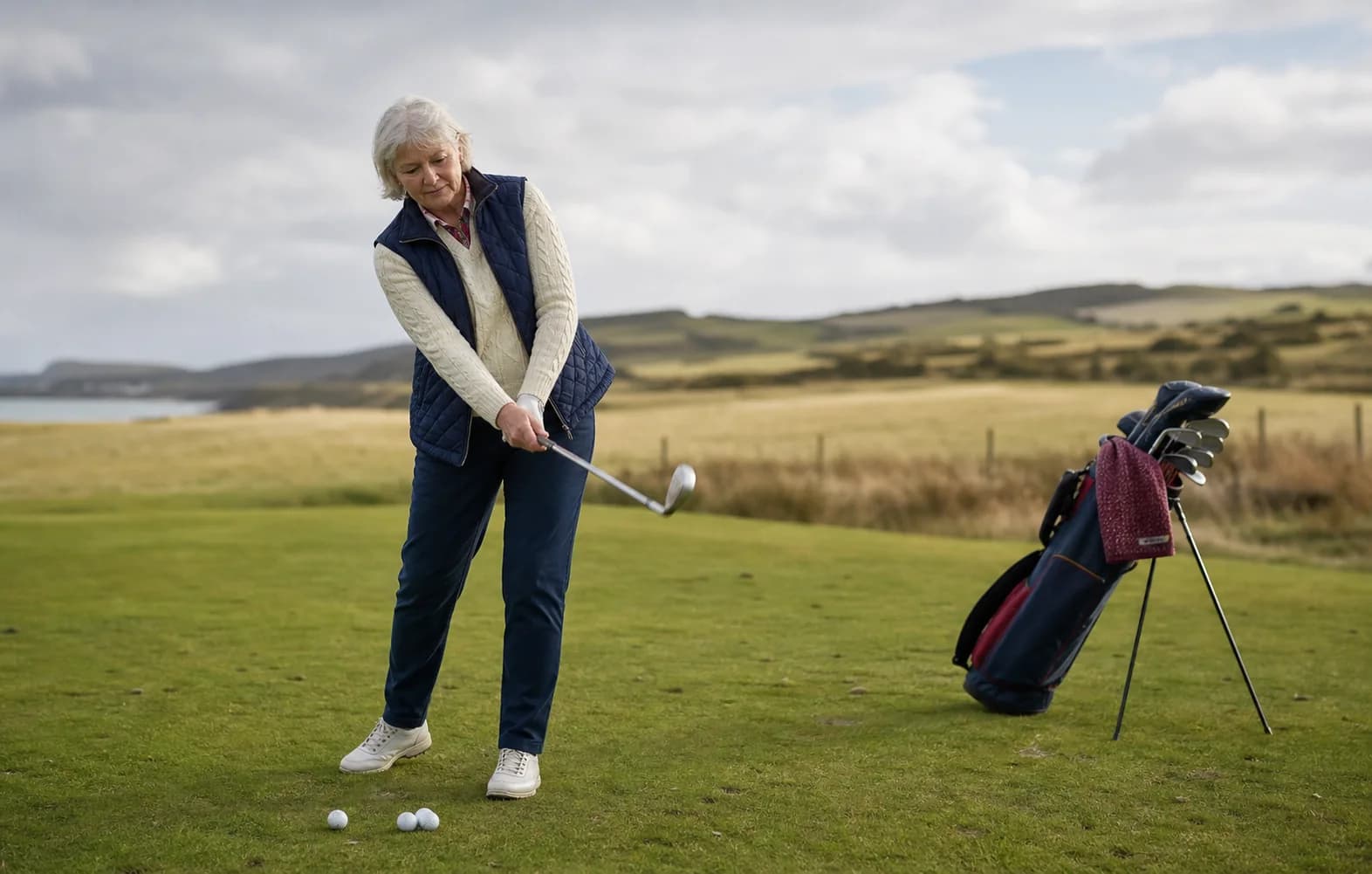
The short answer
Learning to play golf at 60 is a realistic goal. Build an efficient swing around how you move, practise in short purposeful sessions and let technique and sensible club choice do more of the work than force. Start with reliable contact and direction before chasing distance.
Sixty is not too late to begin
Golf does not demand that every beginner starts young or swings hard. The ball is stationary, the pace between shots can be unhurried and the game can be adapted to the distance you comfortably produce. Beginners in later life bring patience, attention and a clear reason for wanting to learn.
Starting later can be an advantage because the goal is usually clear: build a repeatable swing, learn enough short game to finish holes and understand the decisions needed on the course. A one-to-one lesson keeps all of that work relevant to your own movement.
The useful question is not “Am I too old?” but “Which fundamentals should I build first?”
Build the swing around efficient movement
You do not need to copy the range of movement of a tour player. A coach can help you find a stance, turn and finish that match the movement you have today. A shorter balanced swing that returns the club to the ball is far more valuable than a long swing that feels strained or unstable.
Tell the coach about anything that affects how you move, and never try to swing through pain. Golf instruction is not medical advice; if a health condition makes you unsure what activity is appropriate, check with a qualified healthcare professional first.
- Wear shoes and clothing that let you move comfortably
- Begin with smaller swings and build only when they feel balanced
- Use a tee or shorter club when it helps you make contact
- Take breaks before tiredness changes the movement
Do not buy a full set before you know what suits
It is easy to assume that starting golf means an immediate and expensive equipment purchase. It does not. Ask about borrowing a few clubs for the first lesson or check what can be provided before you buy anything.
Once you have made some swings, you will have a better idea of a comfortable club length, weight and set makeup. A small number of useful clubs can be enough while you learn. Spending should follow understanding, not come before it.
The FAQs cover clubs, clothing and other practical questions before your first visit.
Read the beginner equipment answersMeasure progress in more than yards
Distance is only one part of golf. Early progress may be making contact more often, finishing in balance, starting the ball nearer your target or understanding why a shot curved. Around the green, better pace control can remove more frustration than trying to find ten extra yards.
Keep a short note after practice: the one cue that helped, the club you used and the pattern you saw. This makes improvement visible even before the score changes and gives a coach useful information at the next lesson.
- More shots struck from the middle of the club
- A smaller, more predictable miss
- Fewer swing thoughts over the ball
- A more consistent routine in practice and on the course
What the first few lessons can cover
A sensible first lesson establishes contact, balance and a simple way to aim. The next session can review what remained reliable and address the part that did not transfer into practice. A third might add putting, chipping or a few holes depending on what you want from the game.
Ronnie does not require a course of lessons. Book one full hour, practise the assigned priority and return when the change needs reviewed or you are ready to add the next part of the game.
The page explains what happens, what to bring and how the full first hour is structured.
See the beginner lesson in detailBook the first full hour
To book, give Ronnie your experience level, what you want from golf and the days that suit. He will confirm the practical arrangements at Ravenspark directly.
Use the first hour to establish contact, direction and a practice routine. From there, add short game and course work as the fundamentals become more reliable.
Send Ronnie your goal and preferred days to book the full £30 hour.
Book your first lessonMake it personal
The article cannot see your shot. Ronnie can.
Send the problem in ordinary words. A full one-to-one hour is £30, and you will leave with one clear thing to work on next.
Published by
Ronnie Tudhope Golf Coaching
Practical, plain-English coaching guides from Ronnie’s independent service at Ravenspark in Irvine.