Know exactly what comes next
Your First Golf Lesson: What Happens and How to Prepare
No test, no dress-code puzzle and no need to own clubs. Here is what the first hour actually looks like.
The short answer
Your first golf lesson should establish your goal, assess a few shots and build the foundations most relevant to your swing. Wear clothes that allow movement, use shoes with grip, check club availability before buying equipment and expect to leave with one clear practice priority.
Before you arrive
Confirm the meeting point and whether clubs can be borrowed before the day. At Ravenspark, Ronnie can explain the practical arrangement directly. You do not need golf clothing; choose something comfortable that lets your shoulders and hips move, plus shoes with a stable sole suitable for the weather.
Arrive a few minutes early and tell Ronnie what you want from the lesson. Your experience, equipment and goal determine what belongs in the hour.
- Comfortable layers for the Ayrshire weather
- Shoes with grip and a stable sole
- Any clubs you already own, only if convenient
- One reason you would like to learn
The lesson starts with a conversation
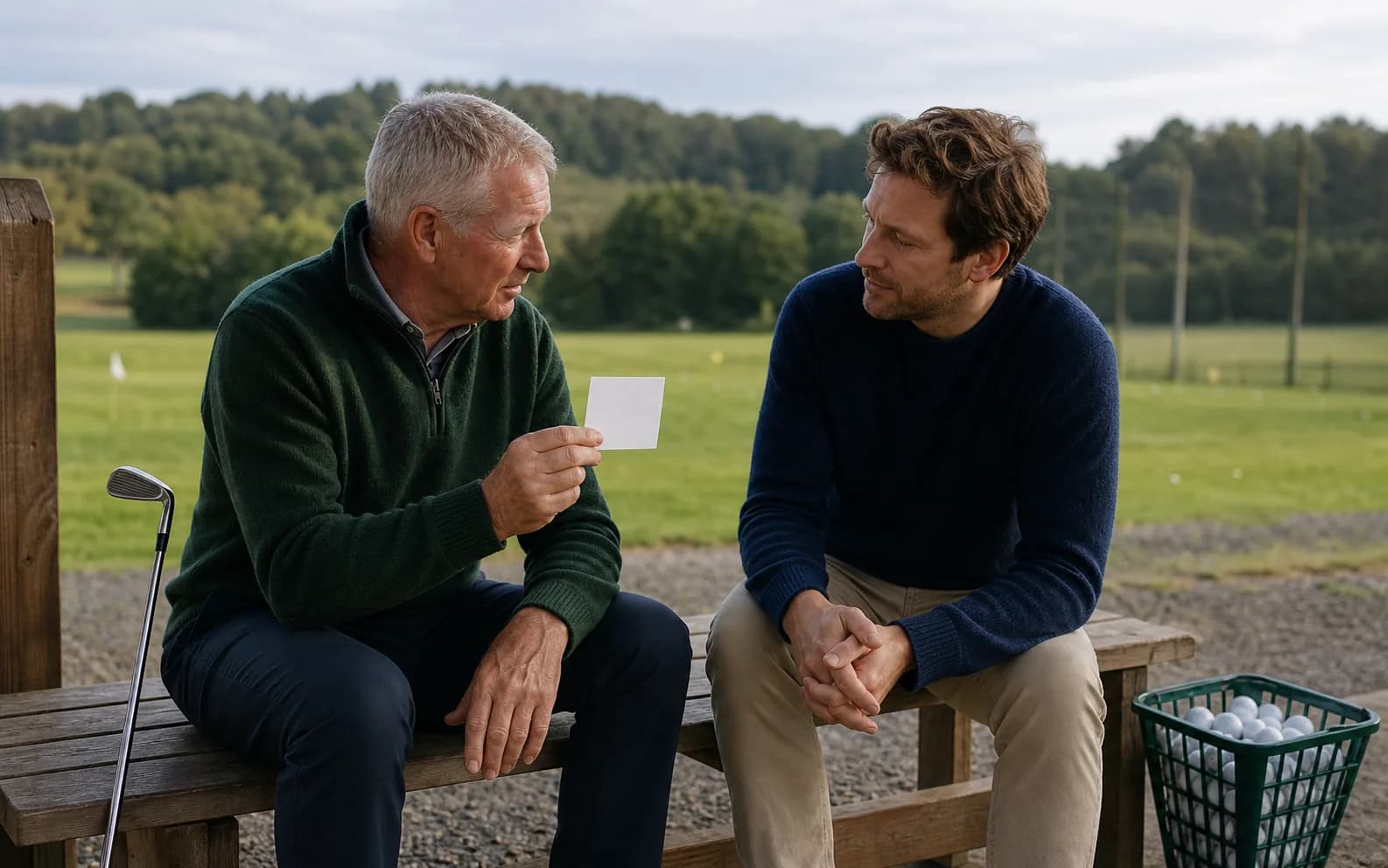
The coach needs to know whether you have never held a club, have tried a range or are returning after a long break. Explain the result you want: joining friends, playing a work golf day, getting onto the course or fixing a recurring miss.
That objective helps Ronnie decide what belongs in the hour and which part of the game can wait.
A few swings establish the starting point
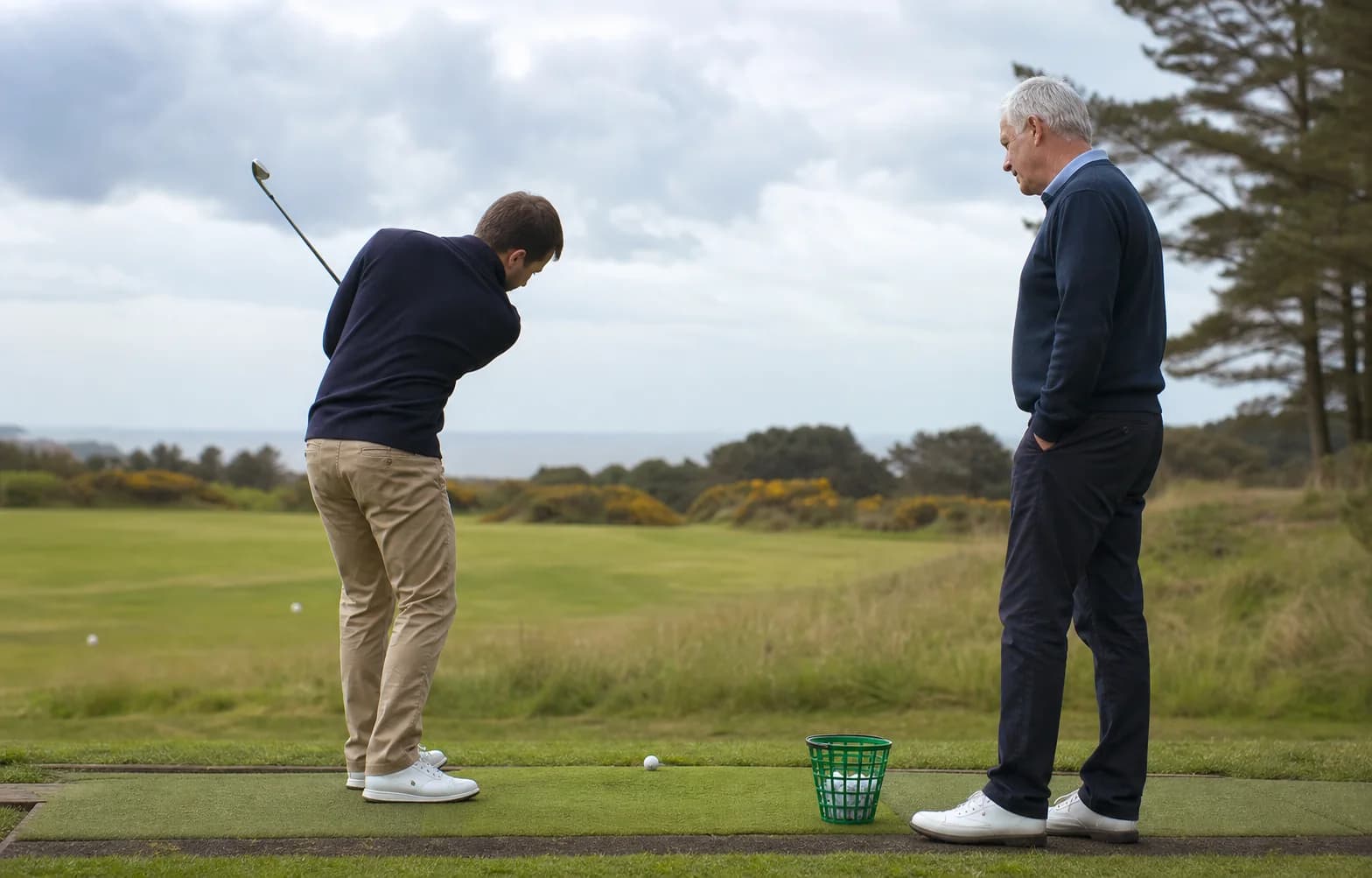
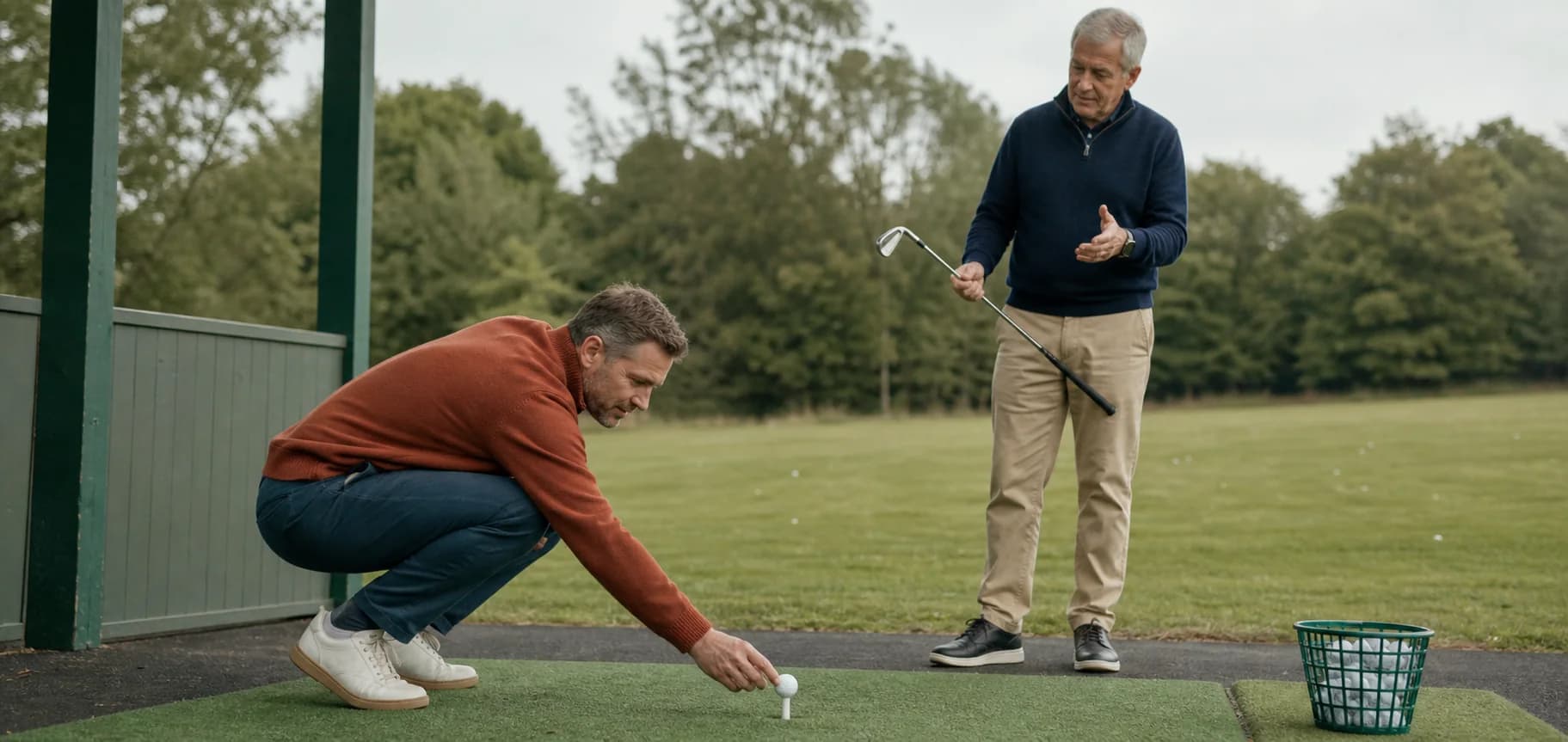
You may begin with a short club, a tee or a smaller movement. The first shots are not a test. They show how you naturally stand, hold the club and move so the lesson can be built around the person in front of the coach.
The first few shots establish the baseline. A miss, top or unexpected curve gives Ronnie information about the setup, strike and movement that need attention.
The first shots establish the baseline for the lesson.
The useful change is usually small
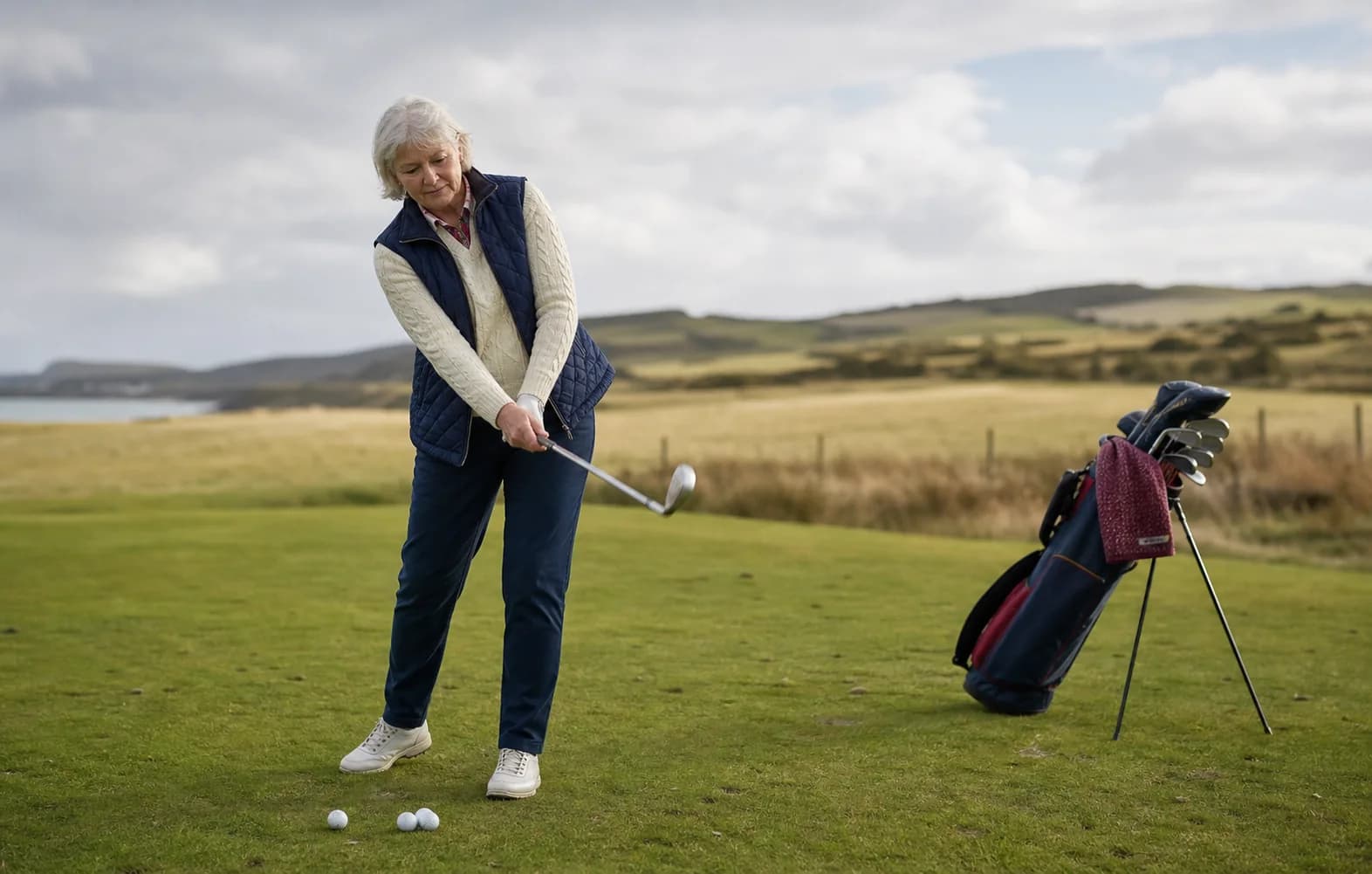
Ronnie might adjust the grip, ball position, aim or size of the swing. You will try the change, compare how it feels and repeat it enough to recognise the difference. Plain language matters because you need to recreate the idea when the coach is not standing beside you.
A lesson is not more valuable because it contains more information. The best outcome is often one improvement you understand and can use, supported by a basic routine for setting up to the ball again.
You finish with a clear practice priority
At the end, establish what to practise, how often and what a good attempt should feel or look like. You should know which club or drill to use and which priority comes first.
Ronnie’s main beginner lesson is a full one-to-one hour for £30. There is no membership or lesson package required. You can practise the priority and decide in your own time whether another lesson would help.
All published prices and inclusions are shown before you make contact.
Check the price and lesson optionsConfirm the practical details before you book
Confirm where you meet, how long the lesson lasts, the full price and what happens if the weather is poor. Check whether clubs are available if you have none, and mention anything affecting movement so the session can be planned sensibly.
Ronnie publishes the £30 price and full 60-minute duration, and handles the booking directly by WhatsApp, phone or form.
Book the beginner lesson and tell Ronnie what you want to get from your first hour.
Book your first lessonMake it personal
The article cannot see your shot. Ronnie can.
Send the problem in ordinary words. A full one-to-one hour is £30, and you will leave with one clear thing to work on next.
Published by
Ronnie Tudhope Golf Coaching
Practical, plain-English coaching guides from Ronnie’s independent service at Ravenspark in Irvine.